Stoves and inserts with heat exchangers: heating the whole house with one fire
Water-heating stoves or inserts transfer most of the heat to water rather than into a single room. Via an accumulator tank, they then heat radiators and underfloor heating systems and warm up domestic hot water. This makes sense where you have wood and want independence.
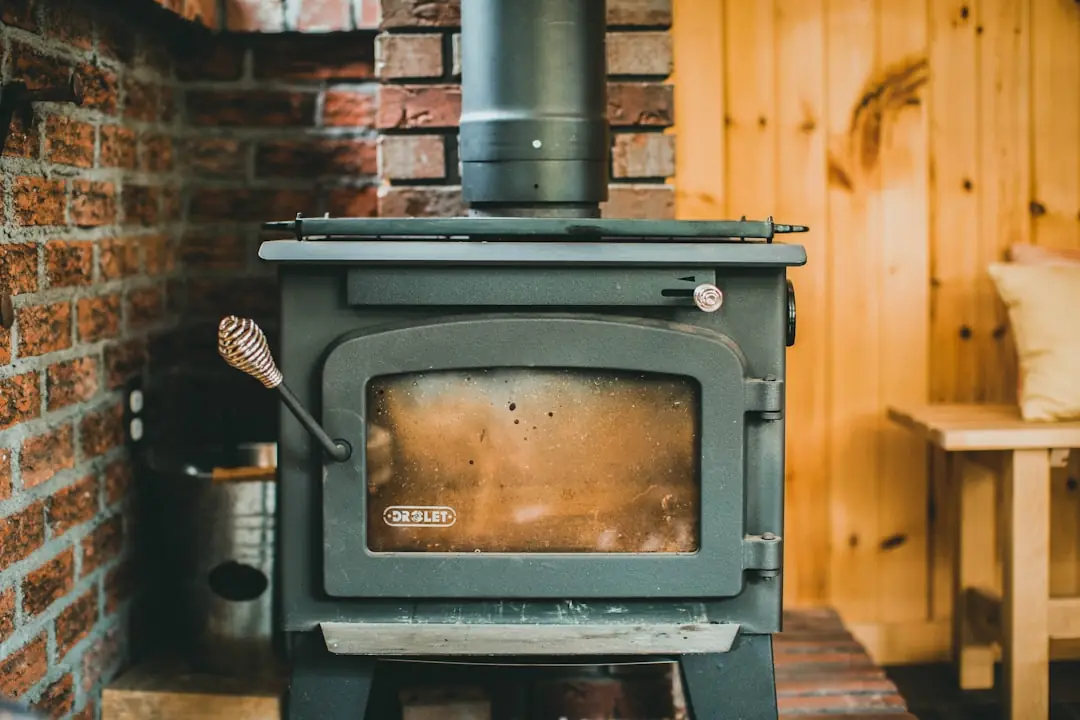
How it works
The combustion chamber contains a heat exchanger through which water flows. A circulation pump drives the water into an accumulator tank, from which the heating system draws heat as needed for several hours even after the fire has gone out. Only a small portion of the output goes into the room with the stove, so it does not overheat.
What this includes
- Buffer tank matching the heat exchanger's output. Without it, the stove does not operate safely or efficiently.
- Overheat protectioncirculation loop or backup power supply for the pump in case of a power outage.
- Mixing of return water, so that the exchanger does not suffer from condensation and tar build-up.
- Connection to the existing heat sourceboiler, heat pump or electric boiler as a backup.
When does an exchanger pay off and when not
They are cost-effective in homes with their own or cheap wood where regular heating is used, and as a supplement to an air-to-air heat pump for the coldest days. They are not cost-effective where you only want to light the fire twice a winter for atmosphere: the heat exchanger needs proper heating. In such cases, we recommend ordinary stoves or storage fireplaces.
Heat output and distribution
For stoves with a heat exchanger, the total output and the portion delivered to water are specified. For a detached house, the output is usually selected based on the building's heat loss, not the room containing the stove. We calculate this during the survey together with the heating engineer who will carry out the connection to the system.
Questions we are asked
Do I need a buffer tank?
Yes. The heat exchanger generates heat independently of the house's current demand, and the tank stores it. Without a tank, overheating is a risk and the stove cannot be regulated sensibly.
Can a stove with a heat exchanger be combined with a heat pump?
Yes, this is a common combination. The heat pump provides heating for most of the season, while the stove with a heat exchanger covers frosty days and reduces electricity consumption. Both units connect to a shared tank.
What happens in the event of a power outage?
The circulation pump will stop running. Therefore, a cooling loop connected to the mains water supply or a backup power source is installed to prevent the water in the heat exchanger from boiling. This is part of the design, not an optional add-on.
Describe the room to us and we will provide a proposal and an appointment date.
Just a few details are needed. Within 24 hours on working days we will get in touch with the next step, usually a free survey and chimney inspection. No obligation.
Prefer to call? 775 654 443